Tuesday, June 28, 2011

Noms de Plume

Since my default operational mode is collaborative/conciliatory, it sometimes causes angst when I confront someone, even in an ironic or humorous way. Such thoughts have been rattling around my brain since my 90 Days post where I made some sidebar comments regarding cartoon posters. 

Imagine my delight then in reading on Huffington Post about the legitimate uses of pseudonyms.

Items on the full list border on NSFW, but the first three justifications for pseudonymous posting will give you a flavor:
  • You are a convicted felon
  • You have Mommy issues
  • You have multiple personalities
Please read the rather informative explanations beneath the captions before responding. 

Sunday, November 21, 2010

Sister Mary Elephant

I suppose Sister Mary refused to submit to the full body scan.

 Someone should let Sister Mary know she has this to look forward to in about 15 seconds:

Unreasonable Search and Seizure

I applaud Representative John Boehner for his recent stand in favor of our Constitution's Fourth Amendment right against unreasonable search. Let us hope he works to extend the right to the rest of the United States' citizenry.

See Below:
http://nyti.ms/9ASyl8
November 19, 2010
Incoming Speaker Takes Commercial Flight, but Skips the Pat Down
By JEFF ZELENY

WASHINGTON — Representative John A. Boehner, the soon-to-be Republican speaker, pledged recently that he would fly commercial airlines back home to Ohio, passing up the military plane used by the current speaker, Nancy Pelosi, a Democrat. But that does not mean he will endure the hassles of ordinary passengers, including pat downs and other new security screenings.

As he left Washington on Friday, Mr. Boehner headed across the Potomac River to Ronald Reagan National Airport, which was bustling with afternoon travelers. There was no waiting for Mr. Boehner, who was escorted around the identification-checking agents, the metal detectors and the body scanners, and whisked directly to the gate.

The Republican leader, who will become the second person in line to assume the presidency after the new Congress convenes in January, took great pride after the midterm elections in declaring his man-of-the-people plans to travel home as other Americans do. In a time of economic difficulty, it was a not-so-subtle dig at Ms. Pelosi, who has access to a military jet large enough to avoid refueling for her flights home to San Francisco.

But he is not giving up all the perquisites of power.

Mr. Boehner, who was wearing a casual yellow sweater and tan slacks, carried his own bag and smiled pleasantly at passengers who were leaving the security checkpoint inside the airport terminal on Friday. Among the travelers not invited to bypass the security line was Representative Allen Boyd, Democrat of Florida, who lost his re-election bid two weeks ago.

Only Congressional leaders or members of Congress with armed security details are allowed to go around security. The same privilege is afforded to governors and cabinet members if they are escorted by agents or law enforcement officers.

Michael Steel, a spokesman for Mr. Boehner, said the Republican leader had neither requested nor received special treatment at the airport security line.

“The appropriate security procedures for all Congressional leaders, including Speaker Pelosi and Senator Reid, are determined by the Capitol Police working with the Transportation Security Administration,” Mr. Steel said in a statement, referring to Harry Reid of Nevada, the Democratic leader.

The flying pattern of Mr. Boehner emerged as the new screenings at airports across the country, particularly pat downs by male and female agents, have elevated discussions about the inconveniences of flying. The Department of Homeland Security has asked passengers for patience as the new procedures are put into place, but pilots’ groups and civil liberties organizations have filed lawsuits asserting that the screening protocols violate Fourth Amendment rights against unreasonable search and seizure.

Thursday, November 18, 2010

100 Body Scans From Security Checkpoint Leaked (PICTURES)

In another stunning example of why TSA Security Checkpoints are an invasion of privacy, Gizmodo obtained through a Freedom of Information request the scans and pictures of people passing through a Florida security checkpoint.

100 Body Scans From Security Checkpoint Leaked (PICTURES): "Earlier this year, the U.S. Marshals Service admitted that--despite promises from federal agencies that such images could and would not be stored--some 35,000 images from a scanner at a security checkpoint at a Florida courthouse had been saved.

One hundred of those body scan images have been leaked by Gizmodo, which obtained them through the Freedom of Information Act. They were taken with using millimeter wave scanners manufactured by Brijot Imaging Systems, Inc, which produce images that resemble 'blurry negatives' with a 'humanoid form,' according to TSA spokesperson Sari Koshetz.

Gizmodo writes,

Yet the leaking of these photographs demonstrates the security limitations of not just this particular machine, but millimeter wave and x-ray backscatter body scanners operated by federal employees in our courthouses and by TSA officers in airports across the country. That we can see these images today almost guarantees that others will be seeing similar images in the future. If you're lucky, it might even be a picture of you or your family.

Body scanners at security checkpoints have become a controversial issue. The Transportation Security Administration has come under fire for employing what many consider to be invasive security screening procedures in the form of pat-downs and scanners.

The TSA said in a 2008 blog post, 'While we have said this many times, it bears repeating, TSA will not keep, store or transmit images. Once deleted, they are gone forever.'

See two of the body scan images obtained from the Florida courthouse's scanner below. The faces of the individuals shown in the photographs have been obscured.

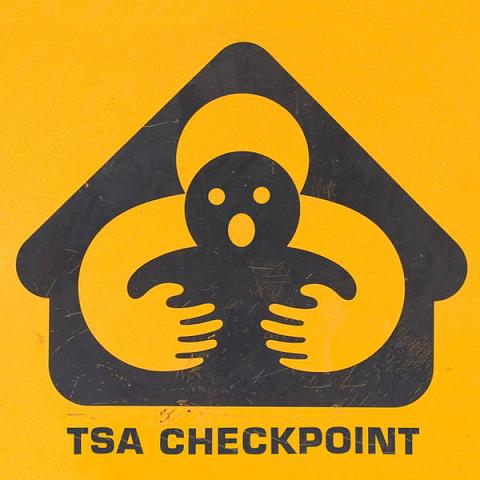
TSA Checkpoint Ahead Sign

TSA Checkpoint Ahead Sign: "


Found on Boing Boing


"

Metropulse Chicago Launches

Metropulse Chicago Launches: "

2010_11_17_metropulse.jpg Metropulse Chicago, a joint effort of the Chicago Metropolitan Agency for Planning and the Chicago Community Trust that serves as the lynch pin for their Regional Indicators Project, launched today. Metropulse intends to serve as an open source portal for media, government officials and concerned citizens interested in tracking the regional quality of life of the greater Chicago area.


We may be oversimplifying this, but think of Metropulse as a hyperlocal wiki for all the things that affect us in the area. From poverty to air quality; health care and community organizing; poverty to civil service, Metropulse has the potential to help everyone from the smallest of neighborhood non-profits to City Hall take a new approach to old problems. The site also will serve in the implementation of CMAP's GO TO 2040 Plan.


Wednesday, November 17, 2010

Scanners

I have now endured the humiliation of having TSA agents talk to me like I am an idiot without fully explaining the gymnastics required to pass a scanner screening. They would rather have you fail four times, clucking and shaking their heads, than explain in clear, reasonable English once what is required. I am fed up with TSA and the ineffective security screenings they pretend to give. I said so on Nate Silver's blog. (http://bit.ly/aaSSV2)

I post an article I read on Israel's procedures. It capture perfectly why I am so frustrated with the US - we - including the government, most of all - are more interested in covering our butts than in making the skies safe.

You can find the original here (http://bit.ly/bQaxhf) but I paste it below.

The 'Israelification' of airports: High security, little bother
Published On Wed Dec 30 2009

Cathal Kelly Staff Reporter

While North America's airports groan under the weight of another sea-change in security protocols, one word keeps popping out of the mouths of experts: Israelification.

That is, how can we make our airports more like Israel's, which deal with far greater terror threat with far less inconvenience.

"It is mindboggling for us Israelis to look at what happens in North America, because we went through this 50 years ago," said Rafi Sela, the president of AR Challenges, a global transportation security consultancy. He's worked with the RCMP, the U.S. Navy Seals and airports around the world.

"Israelis, unlike Canadians and Americans, don't take s--- from anybody. When the security agency in Israel (the ISA) started to tighten security and we had to wait in line for — not for hours — but 30 or 40 minutes, all hell broke loose here. We said, 'We're not going to do this. You're going to find a way that will take care of security without touching the efficiency of the airport."

That, in a nutshell is "Israelification" - a system that protects life and limb without annoying you to death.

Fliers urged to opt out of airport security en masse

Despite facing dozens of potential threats each day, the security set-up at Israel's largest hub, Tel Aviv's Ben Gurion Airport, has not been breached since 2002, when a passenger mistakenly carried a handgun onto a flight. How do they manage that?

"The first thing you do is to look at who is coming into your airport," said Sela.

The first layer of actual security that greets travellers at Tel Aviv's Ben Gurion International Airport is a roadside check. All drivers are stopped and asked two questions: How are you? Where are you coming from?

"Two benign questions. The questions aren't important. The way people act when they answer them is," Sela said.

Officers are looking for nervousness or other signs of "distress" — behavioural profiling. Sela rejects the argument that profiling is discriminatory.

"The word 'profiling' is a political invention by people who don't want to do security," he said. "To us, it doesn't matter if he's black, white, young or old. It's just his behaviour. So what kind of privacy am I really stepping on when I'm doing this?"

Once you've parked your car or gotten off your bus, you pass through the second and third security perimeters.

Armed guards outside the terminal are trained to observe passengers as they move toward the doors, again looking for odd behaviour. At Ben Gurion's half-dozen entrances, another layer of security are watching. At this point, some travellers will be randomly taken aside, and their person and their luggage run through a magnometer.

"This is to see that you don't have heavy metals on you or something that looks suspicious," said Sela.

You are now in the terminal. As you approach your airline check-in desk, a trained interviewer takes your passport and ticket. They ask a series of questions: Who packed your luggage? Has it left your side?

"The whole time, they are looking into your eyes — which is very embarrassing. But this is one of the ways they figure out if you are suspicious or not. It takes 20, 25 seconds," said Sela.

Lines are staggered. People are not allowed to bunch up into inviting targets for a bomber who has gotten this far.

At the check-in desk, your luggage is scanned immediately in a purpose-built area. Sela plays devil's advocate — what if you have escaped the attention of the first four layers of security, and now try to pass a bag with a bomb in it?

"I once put this question to Jacques Duchesneau (the former head of the Canadian Air Transport Security Authority): say there is a bag with play-doh in it and two pens stuck in the play-doh. That is 'Bombs 101' to a screener. I asked Ducheneau, 'What would you do?' And he said, 'Evacuate the terminal.' And I said, 'Oh. My. God.'

"Take Pearson. Do you know how many people are in the terminal at all times? Many thousands. Let's say I'm (doing an evacuation) without panic — which will never happen. But let's say this is the case. How long will it take? Nobody thought about it. I said, 'Two days.'"

A screener at Ben-Gurion has a pair of better options.

First, the screening area is surrounded by contoured, blast-proof glass that can contain the detonation of up to 100 kilos of plastic explosive. Only the few dozen people within the screening area need be removed, and only to a point a few metres away.

Second, all the screening areas contain 'bomb boxes'. If a screener spots a suspect bag, he/she is trained to pick it up and place it in the box, which is blast proof. A bomb squad arrives shortly and wheels the box away for further investigation.

"This is a very small simple example of how we can simply stop a problem that would cripple one of your airports," Sela said.

Five security layers down: you now finally arrive at the only one which Ben-Gurion Airport shares with Pearson — the body and hand-luggage check.

"But here it is done completely, absolutely 180 degrees differently than it is done in North America," Sela said.

"First, it's fast — there's almost no line. That's because they're not looking for liquids, they're not looking at your shoes. They're not looking for everything they look for in North America. They just look at you," said Sela. "Even today with the heightened security in North America, they will check your items to death. But they will never look at you, at how you behave. They will never look into your eyes ... and that's how you figure out the bad guys from the good guys."

That's the process — six layers, four hard, two soft. The goal at Ben-Gurion is to move fliers from the parking lot to the airport lounge in a maximum of 25 minutes.

This doesn't begin to cover the off-site security net that failed so spectacularly in targeting would-be Flight 253 bomber Umar Farouk Abdulmutallab — intelligence. In Israel, Sela said, a coordinated intelligence gathering operation produces a constantly evolving series of threat analyses and vulnerability studies.

"There is absolutely no intelligence and threat analysis done in Canada or the United States," Sela said. "Absolutely none."

But even without the intelligence, Sela maintains, Abdulmutallab would not have gotten past Ben Gurion Airport's behavioural profilers.

So. Eight years after 9/11, why are we still so reactive, so un-Israelified?

Working hard to dampen his outrage, Sela first blames our leaders, and then ourselves.

"We have a saying in Hebrew that it's much easier to look for a lost key under the light, than to look for the key where you actually lost it, because it's dark over there. That's exactly how (North American airport security officials) act," Sela said. "You can easily do what we do. You don't have to replace anything. You have to add just a little bit — technology, training. But you have to completely change the way you go about doing airport security. And that is something that the bureaucrats have a problem with. They are very well enclosed in their own concept."

And rather than fear, he suggests that outrage would be a far more powerful spur to provoking that change.

"Do you know why Israelis are so calm? We have brutal terror attacks on our civilians and still, life in Israel is pretty good. The reason is that people trust their defence forces, their police, their response teams and the security agencies. They know they're doing a good job. You can't say the same thing about Americans and Canadians. They don't trust anybody," Sela said. "But they say, 'So far, so good'. Then if something happens, all hell breaks loose and you've spent eight hours in an airport. Which is ridiculous. Not justifiable

"But, what can you do? Americans and Canadians are nice people and they will do anything because they were told to do so and because they don't know any different."

Sunday, October 24, 2010

Black and White - or Maybe Gray

I had a professor in college who attacked cliches in our written assignments with a red pen and exclamation points. Through their overuse, he felt cliches had lost all meaning.

I have noticed over the years that not only have they lost meaning, but sometimes we use them incorrectly, or we use them without any appreciation of what they were intended to mean.

My favorite example is "I could care less." In today's New York Times, I noticed that Melinda Gates, co-head of the family foundation, said her husband Bill "Couldn't care less" that he had dropped to number two on the list of the world's wealthiest people. Way to go, Melinda - I appreciate her appropriate use of the cliche. And I am sure Bill could not care less if he has a few billion more or less than Carlos Slim Helu of Mexico.

Another misused cliche is "for all intensive purposes." I think the user means to say, "for all intents and purposes," but maybe would be better dropping the phrase altogether.

"You cease to amaze me" is often confused with the phrase "you never seem to amaze me," neither of which contains the wonder of the correct use of the cliche, "You never cease to amaze me." Maybe we would be even more amazed if you "nipped it in the butt." Seems a little intimate to me.

In Friday's Sun-Times, Pat Bruno wrote in response to a reader's question, "The Purple Pig is one of those restaurants you either love or hate. I am somewhere in the middle." Either "Love 'em or Hate 'em" has now entered the cliche hall of fame, or Pat is telling readers that while they must love or hate the restaurant, Pat lays special claim to being in the middle.

Does Pat have an editor? Is anybody reading this copy?

Saturday, September 11, 2010

Black Pucka

Some days, around 3:30 or 4:00 in the afternoon, I see an elderly african-american gentleman on our corner. He parks his car and takes out a folding chair to sit in. The chair is high, and he sets it up at the back of the car and looks over the car over to Agassiz Public School. He is well dressed, usually with a nice cardigan sweater and wool pants, and in the cooler fall afternoons he has started wearing a nice brown fedora which hides his silver hair. His silver mustache is still visible from beneath the hat.

I have tried to catch his eye from time to time to say hello, but his eyes are intent on the school as he waits for his grandkids. After seeing him a few times, I have started to build up in my mind this whole fantasy world about him. While I never have seen the kids, I imagined they would be thrilled to see him, just as Donny and Emily were always happy to see their Pucka after a hard day at Latin. I imagined him having these wonderful conversations with them as he drives them home to their parents. Who knows, maybe he lives with them and watches them as well. And with Allyson watching Carter these days, the entire scene brings back nostalgic, happy memories for me. In my mind, I have started calling him Black Pucka.

I don't see Black Pucka every day, but every day I see him, it gives my heart a little lift. Black Pucka reminds me of the good old days of Our Pucka and our kids when they were little. It reminds me of the circle of life, and how in some strange way, while I don't believe in reincarnation, I believe that the patterns of our lives are repeated and played out in many ways. And just as Our Pucka had his routines that we all grew used to, Black Pucka has his little routines, like his high stadium chair, that bring color to the lives of his grandkids. I even imagine the other parents and caretakers seeing Black Pucka and knowing that all is right with the world.

Today, Black Pucka was not on the corner as I went out for an errand around 4 pm. I walked north on Seminary, and saw a little african-american girl dancing on the sidewalk. As I walked closer, I saw that she was making faces at a kid in the back seat. She was either teasing him or trying to make him laugh. She danced around, made faces, waved at him. And then, the driver side door opened, and out of the car came Black Pucka! I finally got to see Black Pucka in action, watch his interaction with his grandchildren, see the great man as he performed the duties that, while appearing mundane, are critical to the kids' happiness and the functioning of a well-run household. Black Pucka in the flesh!

As he approached his granddaughter, I finally heard Black Pucka speak. His voice was a low, rumbling bass, from deep within his chest. He looked at his grandaughter and said in that low, deep voice, "Leave that motherfucker alone".

I guess there are more differences between Our Pucka and Black Pucka than just the color of their skin.

Sunday, May 30, 2010

Summer in South Haven

Summer has officially arrived in South Haven.

The pool is open.

The weather this weekend was perfect - no hotter than 76 degrees. Sunny all day, cool at night.  This has been the best weather Memorial Day weekend I can recall.  Absolutely perfect.

I ran yesterday from the Haven to Avalon.  Avalon is in the water and looks ready to cruise. Allyson walked to the light house.  Summer is here.

We discovered a new restaurant in Fennville, "Salt of the  Earth," which is our new Michigan favorite.  They had a group tonight performing Lyle Lovett and blues tunes.  The food is amazing.  We shared a White Chicken pizza with bacon.  Allyson had pappardelle, Donny Gnocchi, and I braised pork shoulder with polenta and a side of brussel sprouts that were to die for.  They also have a nice wine list, with a killer $8 glass of Three Sisters zinfandel that made the music all that more enjoyable.

We went to Doug and Michael's for their inaugural summer party and connected with a number of old friends.

The stereo is working, with a mix of Allyson and Don tunes competing for attention.

We hosted an evening with Bill and Tory, Leslie and Mark last night. Just appetizers and conversation on the deck as we watched the sun set.  Summer is here.

We are getting the place ready.  Screens on the porch go up tomorrow Morning.  We are working out some winter kinks.  All in all, the house held up well during the winter.  Now, the flowers are coming in, the chives are growing in the herb pots, and the trees are providing shade.

Grace is adjusting to life as a single puppy.  She doesn't run like a little maniac on speed, but she did enjoy a little time on the beach. She ran into the water, enjoying the lake and the gentle lap of the waves.  Summer is here in South Haven.

We can't wait to see you all.

Friday, May 21, 2010

What GTM Are You?

If I were a Springer-Verlag Graduate Text in Mathematics, I would be  W.B.R. Lickorish's An Introduction to Knot Theory.
I am an introduction to mathematical Knot Theory; the theory of knots and links of simple closed curves in three-dimensional space. I consist of a selection of topics which graduate students have found to be a successful introduction to the field. Three distinct techniques are employed;  Geometric Topology Manoeuvres, Combinatorics, and Algebraic Topology.
Which Springer GTM would you be? The Springer GTM Test

Friday, March 26, 2010

In Memoriam: Crissy

Crissy was part of our family for the past twelve years. He passed away on March 6, 2010, in Allyson and my arms after a diagnosis of lung cancer.

Crissy was our family's first dog. He was always wonderful with the kids when they were little. He suffered through our early mistakes, as first puppies do, leading to regrets of what we could have done better. All in all, though, he seemed very happy living with us.

Crissy spent most of his days sitting on his dog bed in the family room, staring out at the back yard. He would rouse himself, barking, when someone rang the doorbell, or if he saw a rabbit or rat in the back yard. His favorite daytime activities were his walks. He ran to the front door, sometimes shaking with excitement until he got out to the sidewalk, and then marched along, sniffing and watching. No weather deterred him from enjoying the time outdoors. We felt good about engaging the services of Paws Claws and More, and he enjoyed his daily walks with Gracie and our dogwalkers, Betsy, Claire, Chris and Sam.

When I would sit at the dining room table for dinner, or while reading my Sunday paper, Crissy would come up to me and push his head into my right hand, persisting until I gave in and petted him. At times, he wanted to be petted for over an hour, shifting his body so that different parts of his body were scratched without me moving my arm. His favorite scratch was in his ears, a special treat.

In his later years, I would lift him up on Emily's bed, holding his outside legs while flipping him on his side before scratching his haunches. Crissy would stretch his neck out and smile, enjoying the bedtime attention.

Crissy was extremely well-behaved, but had naughty moments. He once jumped on the kitchen table and ate food we had left out for our niece. He also liked to sneak into the pantry and steal doggie treats. His only other fault was bad breath. Licks from Crissy were particularly hard to take, as his breath could knock you out.

Crissy also loved rides in the car. He would run to the door, jump up on the back seat, and then try to climb in the front. While we drove, he would stare out the window, occasionally barking at passing dogs, but otherwise content just to take in the scenery.

My favorite memories of Crissy will be the times we shared in the back yard at our house in South Haven. He loved the freedom of running as fast and as hard as he could, no leash to restrain him, chasing Gracie or his next-door neighbor friends, Shelby, Sadie, Murphy and Cooper. When he tired, Crissy would lay down in the grass, his front paws crossed regally in front of him, observing the antics of the other puppies. He loved his walks in South Haven even more than in Chicago.

Crissy lived a good life. His decline was mercifully sudden, but he left us before we were ready to say goodbye. We miss him terribly, and look forward to the day when we can watch him run in endless fields, playing with his friends and then panting from exhaustion, only rousing himself to poke his head into our hands, demanding scratches and attention.

Saturday, February 13, 2010

Paperwork

I was waiting to cross LaSalle Street at Madison during this past week's driving snow when the gentleman next to me stepped into the path of a car running a red light.

I grabbed the soft elbow of his tan cashmere overcoat and firmly pulled him back. He whipped his head around to look at me accusingly, then turned to see the cell-phoned woman piloting the errant Camry, clueless to the world, through the snow-covered intersection. He turned his head back to me, his face filled with gratitude and apology. "Oh my God. Thank you."

I looked at him and with a mixture of paternalism and amiability crowed, "Don't worry about it. Do you know how much paperwork I have to fill out if I see some guy killed in an intersection?"

The woman next to him burst into laughter. He looked at me with bewilderment. And I walked off, content in my role as slayer of bureaucracy and thwarter of young women more concerned with cell phones than murder.

Friday, January 1, 2010

Up In The Air

The woman in front of me announced loudly, "Jimmy, don't let the security man find the bomb in your suitcase." As you might imagine, the statement caused quite a stir. The airport security guards stopped the screening line, located Jimmy's suitcase, and searched it. Meanwhile, the woman chatted with her friend, whining about how seriously the security detail seemed to take her obvious joke. One of the security guys finally leaned over to her and said, "Ma'am, joking about explosives in a bag is a federal offense. You can go to jail for that."

Assured that Jimmy did not, in fact, have a bomb in his suitcase, Jimmy and his Mom were cleared through security along with the rest of the two families making their way on a fun family weekend.

At the time, I was upset because I usually left myself five minutes to park my car in the parking garage and clear security. With five minutes before flight time, I would hit the bar for a beer and then climb onto the plane as one of the last entrants. Jimmy's Mom was cutting into my Friday afternoon bar time after a hard week consulting.

This was in 1985. The time before terrorists.

Today, Jimmy and his Mom would be lucky if they weren't shot. They certainly would be arrested. In all likelihood, the entire airport would shut down, and possibly be evacuated. We would all be on the wrong side of security for a beer, and most likely would wait outside for an hour or two, shivering in the cold Detroit air, before operations resumed.

I am not condoning Jimmy's Mom's behavior. As I said, I was pretty angry at the time, and the story has stuck with me all these years. But after watching the movie "Up In the Air," I was reminded once again by what the terrorists have taken from us.

First and foremost, they have taken away our common sense. We don't want to profile people at the risk of appearing racially insensitive, so 82 year old grandmas undergo humiliating searches and wandings and questionings as TSA agents attempt to figure out if Grandma has the necessary paperwork to clear her metal hip through security. In 2005, Jon Stewart hosted a pundit who joked after the shoe bomber attempted his attack and we were then all forced to take off our shoes, "You'll know the terrorists really have a sense of humor when we see the underwear bomber." I guess the terrorists have a sense of humor.

I left my consulting job of 23 years in some small part because the travel was no longer fun. I used to love the fast-paced race from ticket window to gate. One of the greatest joys was boarding a plane as they slammed the door behind you, confident that you had not wasted a minute waiting.

Now, we all wait. We wait and wait and wait and are humiliated in the process. We are made to feel stupid the one time we forget to remove our three ounce bottles of shampoo and toothpaste and deodorant from our bags and are admonished by the TSA agent that we must place the items in a clear plastic bag. One time, my deodorant was in a 4.5 ounce container. I begged the agent to let me slide so that I was not forced to find a drugstore during my overnight business trip. She did, but not before giving me a stern warning about what would happen "next time."

We wait, and we are humiliated. And worst of all, we all know it is a colossal waste of time. If airport security isn't even checking the names of the guys on the terrorist watch list, and we let a Nigerian with a one-way ticket paid for in cash with no luggage board a plane, then what are they going to find in the endless shoe-searching and patting down and removing the laptops from the bag charades?

The attacks on board planes since 9/11 have been prevented by citizens. One of the four surprise attacks on 9/11 was prevented by citizens who would not allow their plane to attack the White House or wherever it was headed. The government needs to start treating us as allies and as adults. We are all in this together. Don't look at me like I am some type of criminal for carrying on a large deodorant, and I won't hold you accountable for terrorist attacks. Let's work together to do our best to prevent terrorists, and then rally when we are attacked.

I didn't blame George Bush or the CIA or the predecessor to the TSA for 9/11. And I don't expect them to keep us safe now. What I can't forgive is the humiliating pointless activities that rob us of our privacy and dignity. The terrorists are always going to be probing for holes and looking for ways to hurt us.

Benjamin Franklin said, "Those who would sacrifice liberty for security deserve neither." We deserve better than what we have now. We deserve better than the loss of freedom and dignity. We are a great nation and great people if we are resilient in the face of attack and terrorism. We let the terrorists win if we let them rob us of privacy, and liberty, and dignity, and then, when attacked, we attack each other and seek to hold good people responsible for the acts of evildoers.

I heard some say Obama should have fired everyone who was involved in allowing the underwear bomber to attack. Yet in the private sector, the greatest leaders allow people to learn from their mistakes. We need to be more tolerant, more forgiving of those who are trying to protect us. In exchange, our leaders and those who seek to protect us need to treat us with respect, honor our rights, and work with us to meet this threat of evil. If not, we don't deserve to be free, and we will not be safe.

Tuesday, November 3, 2009

Five-Second Rule

Halloween evening, my sister spilled M&Ms on the kitchen floor. A debate ensued, as we picked them up, on whether we could invoke the five-second rule. Food that falls on the floor but is then picked up within five seconds is still fair game for consumption.

Jen had just read an article about the “10 Myths Your Husband Will Tell You About Raising Children.” The five-second rule came in for heavy criticism. Allyson and I countered with an article we had read that scientifically proved that germs do, in fact, take a little time to adhere to dropped food. Five seconds was a good guideline for demarcating eligible from inedible food.

The next morning, I waited in the checkout line at Costco. In the line next to me, a baby threw his bagel to the ground. It bounced a few times before coming to rest. Dad scooped up the bagel and handed it back to the baby, who obliged by shoving it in his mouth.

I am sure this calculus drove dad’s behavior as he retrieved the bagel: “Screw it. I don’t care what my wife thinks – I think it is OK for Ralphie to eat this hairy dusty bagel.” To most dads, what we believe are not myths – they are articles of faith that guide our actions when our wives are not watching. Occasionally, these articles of faith are proven true by scientific research.

I grew up believing that it is OK to give kids a shot of whiskey or glass of sherry to calm them down Christmas Eve. That trips to the emergency room are only to be made when limbs have been amputated or vital organs pierced. That helping kids with their math homework is a form of torture for the kids. As much influence as my wife has on me, I still treat these as articles of faith. I await the scientific proof to validate my beliefs on these topics. Certainly, the current health care debate lends credence to the idea that inappropriate use of emergency rooms is driving costs out of control. Proof on the others is, I am sure, in the works at some research university. But I don’t know if I will ever pick up a bagel from Costco’s floor and shove it in my mouth.

Monday, September 28, 2009

Amazing Grace

My wife and I recently had an argument about Michael Vick. She was offended by his return to football - to my beloved Iggles, no less - and to the riches he would achieve after his heinous crimes. I took the opposing view. The man had done his time. He paid the price society had levied, and now he ought to be welcomed back into civil society. She felt his crime was too great to allow him to earn fame awaiting him in Philadelphia as a third-string quarterback. The argument got me to thinking, when is someone redeemed? When is a crime too great to forgive?

We have had lots of examples recently to debate. Teddy Kennedy arguably placed his own political career above the life of a young woman. Only he knows the depths of his crime, although we all judge. But did 41 years of service in the US Senate redeem him? His obituaries wrestled with the issue. The Wall Street Journal placed his crime in the first paragraph. The more sympathetic New York Times waited until paragraph two. They both had to mention it, though. We all weighed Teddy's 41 years of good acts against his action that one drunken evening in Chappaquiddick.

I am sure Mark Sanford and Eliot Spitzer's obituaries will both weigh the years of public service against their sexual antics. Michael Jackson's obituaries all acknowledged the shadows of unspeakable crimes against his artistic genius. They all beg the question of whether our ability to forgive is determined not by the seriousness of the crime, but our attitudes toward it?

For my wife, torturing and killing dogs is a crime that should sentence one to a life of poverty and reflection. Yet shouldn't the indiscretions of climbing drunk into a car, driving off a bridge, swimming away from a drowning woman, and never admitting your crime, weigh more heavily against the man who admits to his failings and promises to do better?

The problem is that the apologies are too formulaic, too easy, too transparently motivated by a desire to move on. Kanye West apologized for his attack on Taylor Swift not to Taylor Swift first, but to America on Jay Leno. He called Ms. Swift later to apologize personally, and then his "people" publicized the fact. Mark Sanford apologized but then insulted his wife by professing his desire to fall back in love with her after having hot Argentinian sex. Spitzer got the tone right, but his previous holier-than-thou stance against financial misconduct made him a greek tragic figure. Wall Street cheered his humiliation.

Teddy never apologized. Michael Vick did. He tearfully confessed his failings on "60 Minutes" - a more serious choice than Jay Leno - and seemed sincere. And, I remind you, he did his time. If society decides that three years in prison is punishment, do we have a right to punish him more? Why is his crime - yes, horrible and disgusting - any worse than Teddy Kennedy's? The answer can't be that he got caught. That is far too cynical.

I could not bear to be judged by my worst sins. Having them publicized, debated on talk shows, argued on talk radio, and weighed against my good acts - I would beg for redemption. More, for forgetfulness. Growing up Catholic but dating born-again Christian girls, I was confronted with the tension between the one true church's teachings that good works would get me into heaven and the opposing view that by faith alone would I reach the Kingdom of Heaven.

Amazing Grace, how sweet the sound,
That saved a wretch like me . . .
I once was lost but now am found,
Was blind, but now, I see.

If good works win, then do we forgive Teddy for his service and Michael Jackson for his art, but damn Michael Vick because he is just a football player? If it is amazing grace that redeems us, then can any of us judge? Isn't it, in the end, one's own relationship with God that determines whether we forgive ourselves? As humiliating as our sins publicized may make us, it is our inability to forgive ourselves that destroys our soul.

Each of us has to confront our own failings and reconcile those with our good works and our self-view to decide whether we die in peace. The debates about forgiveness, about whether to grant or withhold it, are really about whether we could forgive ourselves for committing the sins made public by these public figures. In judging them, we judge ourselves. If we are human, we pray that we never walk their path. If we do, then I guarantee that after the sin, while committing good works, we are praying for Amazing Grace to help us find peace.

Wednesday, September 23, 2009

Ani DiFranco. Vic Theater. 9/23/09.

If you're not
If you're not
If you're not
If you're not
If you're not getting happier as you get older
. . . .
You're fucking up

Friday, June 19, 2009

Do I Dare Eat a Peach?


I intended this to be a post about graduation. Graduation came and went. I got a cold, flew to Washington, and fought the ravages of chest and head congestion.

This is, one may say, my inaugural visit to our Washington, DC, apartment, a very nice set-up just a block from the White House. The location enables one, as I remarked to someone a few nights ago, to live as close to the White House as possible without getting elected. It is so close, in fact, that the attached picture was taken on one of my evening constitutionals wandering the neighborhood.

Allyson arranged an impressive week for me. Tuesday night we enjoyed an engagement celebration with Steve and Katrina at Bourbon Steak, a Michael Mina restaurant. It is a phenomenal steak place. Invoking T.S. Eliot's "The Love Song of J. Alfred Prufrock", however, I explained to our guests that I can't eat steak late at night anymore. It keeps me up at night. Allyson assured me the young couple would both order steak, because steak is expensive and good and beyond their means at this early time in their lives. Allyson and I, able to afford not only our own but their steaks, steaks for all, opted more prudently for halibut and tuna, so as not to suffer nighttime terrors. They had the steak, aged and cooked in butter, and loved it. I pined silently for the good old days as I ate my healthy tuna.

Wednesday I visited the Newseum, which I recommend. Thursday I met a school friend, Angela, at Cato for lunch, where we heard Judge Napolitano opine on Dred Scott's revenge. Then I toured the Natural and American History Museums before visiting Allyson at work. We toured the EEOB, and helped surprise her boss with a surprise Birthday Party in a very special room, before heading to the West Wing, as show in the picture.

Today we toured the East Wing and the main White House. I then headed up to Ben's Chili Bowl, recommended by Steve and Katrina and a DC institution. I sat at the counter and ordered a half smoke with chili and cheese fries with a coke. Very good. Worth a visit, even if the half-smoke isn't as good as the sausages Robbie gets from the old guy at 69th in Stony Island back home. But I wolfed it down before heading back to the apartment.

Just in time to be overcome with illness. The half-smoke did its damage. I recalled once again Eliot's "Prufrock," this time too late. I excerpt:

I grow old … I grow old …
I shall wear the bottoms of my trousers rolled.
Shall I part my hair behind? Do I dare to eat a peach?
I shall wear white flannel trousers, and walk upon the beach.
I have heard the mermaids singing, each to each.
I do not think that they will sing to me.

I would have liked to see what Eliot would do with rhymes for "half-smoke." I'm sure they do more damage than any innocent peach. But no peach has the fire and greasy goodness of a half-smoke smothered in spicy chili.

Saturday, May 30, 2009

Fackeltanz

I remember my Nana as a sweet, kind grandmother. I was always one of her favorite grandchildren. I knew it; my sisters knew it. I was the grandchild who was invited down to live at the Jersey Shore for weeks at a time, a privilege rarely extended to my sisters.

She was so nice to me, I think it even bothered my father a little. He once commented, "She is all sweetness and light now, but when I was a boy, your grandmother was a tyrant. We lived in fear of her." He tells the story of when a teenager of coming home late one night, after curfew. Dad snuck into the house, tiptoed up the stairs, slowly creaked open his bedroom door, and, without turning on the light, closed it softly behind him, moving forward in the dark. And tripping over the furniture Nana had rearranged for just this eventuality. As he sprawled headlong over a newly placed chair, she turned on the light next to where she was sitting, launched herself up and at him, and beat him with fury, curses raining down upon his head.

I never saw this side of Nana. Until the spelling bee.

I had qualified for the spelling bee when I was 10 and in 4th grade. In fact, after winning the competition at Red Lion Elementary, I competed in the Montgomery County regionals on the evening of my 10th birthday. These memories came rushing back to me as I watched the National Spelling Bee competition on TV this past Thursday. Each contestant stepped up to the mike, was given a word, asked for its use in a sentence, language of origin, part of speech. Some of them clearly knew the words anyway, but the ritual helped calm them. Others, though, were just as clearly terrified by words they had never encountered in their studies.

Anamika Veeramani from North Royalton, Ohio, had that look of terror in her eyes when presented with the word, Fackeltanz, in the fifth round. "Fackeltands," she repeated. The judge corrected her, saying "Fackeltanz. Listen to the ending of the word. Fackeltanz." Anamika asked for the definition. "Fackeltanz is a type of court dance performed in Germany to celebrate royal marriages." Well, that was helpful. Who even knew Germany had royalty anymore?

The TV commentators said that if Anamika remembered her German spelling rules, this word would be a breeze. I looked an Anamika, and my heart melted. She was one of five people left in the competition out of 293 starters, and she knew her dream was ending. The agony was visible. "Fackeltanz," she repeated, "Fackeltanz. F-A-C-U-L-T-E-N-D-S." The dreaded bell rang, and Anamika's dreams were over. She walked back to her mother and father, who were, with all of the finalists' families, sitting on stage, and she collapsed into her father's arms in tears. After sobbing uncontrollably, she turned to her mother and collapsed into her arms.

I felt the painful flashback to my own spelling bee trainwreck almost forty years ago. I survived rounds one and two with chocolate and initiate. Then, in round three, I was presented the word "militia." I had never heard of the word. "Militia - would you please give me the definition?" "Militia is a part of the organized armed forces of a country liable to call only in emergency." I still had no clue. "Could you please use it in a sentence?" "George Washington's militia braved the cold of Trenton before attacking the British on Christmas night." Still, I had no idea what the word was. "Militia. M-A-" The bell rang. In this competition, they didn't waste time waiting for you to butcher the entire word. They stopped you after the wrong letter. My head swam. The room started spinning. I weaved off the stage, where a young, good looking young man put his arm around me. "What word did you miss?" he asked. "Militia." "Aww, that's a tough one. Good job, man, good job." To this day, his kindness to a chubby ten year old still moves me.

No such sympathetic hugs awaited me as I returned to my family in the audience. My parents faces were full of pride and sadness that my dream had ended, but one look at Nana told me that something had gone horribly wrong. I took my seat between Mom and Dad. Once I settled in, my head still spinning, Nana leaned over my father, her face screwed up in fury. "MILITIA," she hissed at me, the spit flying off her lips. "MILITIA," she whispered again, "M-I-L-I-T-I-A!" I looked at her, dumbfounded. "How could you miss that?" she wanted to know, her voice sounding like a snake's evil hiss. "M-I-L-I-T-I-A! Any idiot would know that." With that, she turned away, confident I had gotten the message.

The night got worse. After dropping Nana off at her house, we came home to find our house had been burgled. The thieves stole one of our televisions, and worse, ruined three door frames with the crow bar they had used to try to pry doors open. My family was in shock, scared that strangers had violated our home. My birthday cards, lined up on the mantel above the fireplace, had evidently escaped their attention, as they had left the money hanging over the backs of the cards. I went to bed, on my birthday night, feeling stupid and scared of burglars and miserable.

I hope Anamika's night was a little better than mine. I hope she didn't have her own Nana waiting for her, accusingly asking her how she could miss such an easy word. I hope her Nana didn't vest the hopes and pride of a family in this little 12 year old girl, and that Nana knew that life throws all of us our own militias and Fackeltanzes. What matters is how we bounce back from them. And while I have bounced back pretty well, I still know how to spell militia.

Thursday, May 7, 2009

Old Friends

I am taking a class this quarter called "Massive Change." After a whirlwind tour of the past 5,000 years of economic history (provided by the professor), we have recently been treated to student presentations on topics. Last night, one of my colleagues presented on the aging world population. It was one of the most disturbing presentations I have seen.

Alan asked a number of hard questions on the nature of society's responsibility for its aging. The sheer numbers will overwhelm existing social service providers in the coming years. The financial aspects are daunting, as current social benefit programs cannot afford to support the coming waves of elders. The fastest growing demographic in the United States are people aged 85 and above. Many of these people are simply unable to care for themselves, and some of the oldest have children who are too old to care for them as well. He discussed the possible outcomes of increased support for euthanasia or ritual suicide. Most disturbing, the professor weighed in with the observation that there are no mechanisms to ensure that those without the ability to fight back or complain (e.g., the old and infirm) are not treated with cruelty by nursing home providers.

Alan offered no easy solutions. Beginning the dialogue is an important step, however, and I appreciated his taking this topic on. I had not thought about many of the issues he raised. Now that I am thinking about them, I am a little frightened and saddened. But wiser for knowing. I hope that with knowledge will come wisdom. Until, that is, I am too old to do anything about it.